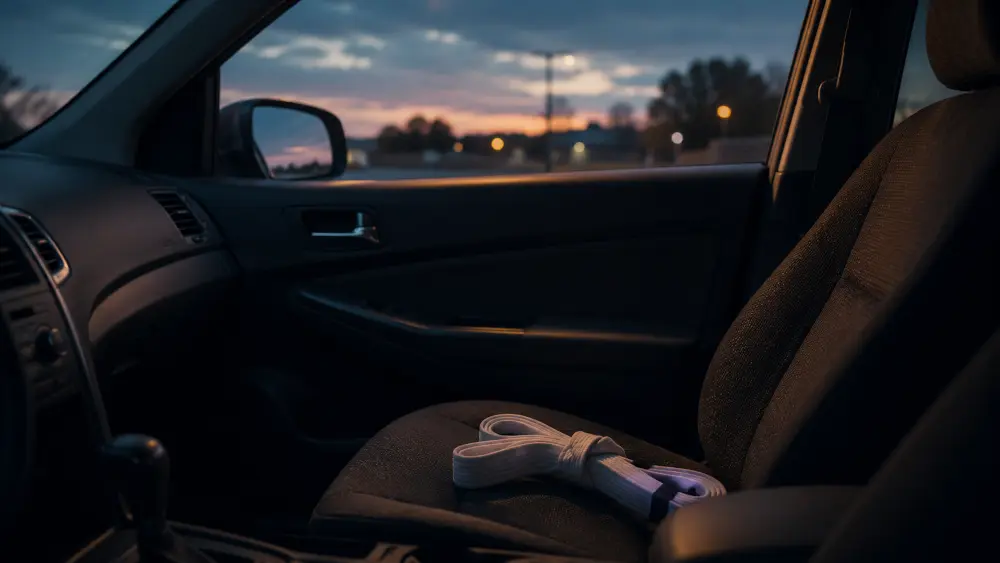
Losing someone at a young age can shape the way you see love, time, and relationships for the rest of your life. When grief arrives before you understand it, it doesn’t just hurt—it changes how you attach, how you protect yourself, and how deeply you value connection.
This was the first time I experienced that kind of loss.
There are moments in life that divide everything into before and after.
This was one of them.
I was still a teenager—still forming, still learning who I was—when my training partner and closest friend died in a DUI accident. I was there. In the car with his parents. Close enough to feel the shock ripple through the air before my mind could make sense of it.
I didn't just lose a friend that day.
I lost a version of myself that believed life followed rules.
When Death Arrives Too Early
Nothing prepares you to watch grief hit adults who are supposed to be stronger than you.
Nothing prepares you to feel helpless while the world collapses around people you love.
I remember the quiet more than anything
The disbelief.
The way everything felt suddenly unreal, as if life had slipped out of alignment and no one knew how to put it back.
That was the first time I truly understood that tomorrow is not guaranteed.
And once you learn that lesson, you never unlearn it.
What Losing Him Changed Inside Me
After that loss, something in me shifted.
I became more serious.
More guarded.
More aware of how quickly people can disappear.
I learned that attachment is dangerous—not because it isn't worth it, but because it costs you something when it ends. And yet, despite that knowledge, I didn't stop loving deeply.
If anything, I loved harder.
Because when you've lost someone young, you learn to value connection differently. You stop assuming there will be another chance, another conversation, another tomorrow.
Love became sacred to me.
Time became precious.
People became irreplaceable.
Grief Without Guidance
There was no one teaching me how to grieve.
No one explaining what to do with the anger, the sadness, or the confusion.
So I did what I had always done—I carried it alone.
I trained harder.
I stayed busy.
I stayed disciplined.
I didn't slow down long enough to feel everything.
Grief doesn't disappear when it's ignored.
It just waits.
And years later, I would realize how much of my intensity—my urgency, my drive, my fear of loss—was born right here.
That intensity didn’t just affect how I handled loss. It shaped the way I approached love, connection, and the fear of losing people again. I explore that more in The Fear That Love Must Be Earned.
That intensity didn’t just affect how I handled loss—it shaped the way I approached love, connection, and the fear of losing people again. I explore that more in How to Stop Believing Love Has to be Earned.
Why I Love the Way I Do
People sometimes misunderstand how deeply I attach, how fully I show up, how much weight I place on relationships.
This is why.
When you've watched life take someone without warning, you don't love casually. You don't half-commit. You don't assume time is endless.
You love like moments matter—
because they do.
That loss taught me that people aren't replaceable.
And that truth still guides how I show up in the world.
The Cost of Loving After Loss
Grief didn't make me cold.
It made me careful.
I learned to protect my heart while still offering it.
To brace myself for loss while hoping for permanence.
To live with the quiet fear that what I love most could vanish.
That tension—between openness and self-protection—has followed me ever since.
But I would rather feel deeply than not feel at all.
Because love, even when it hurts, is better than emptiness.
"He heals the brokenhearted and binds up their wounds."
What This Loss Still Teaches Me
I don't think grief ever truly ends.
It just changes shape.
That early loss taught me empathy for others who are hurting.
It taught me patience with sorrow.
It taught me that strength isn't pretending you're unaffected—it's continuing to love anyway.
That was the first time grief spoke my name.
It wouldn't be the last.
But it taught me something important:
Even after loss, the heart can still choose connection.
And that choice—to keep loving despite the risk—became one of the most defining truths of my beginnings.
Continue the Story
These chapters continue the journey from early loss into love, identity, and healing:
- How Discipline Became My Survival (Learning Strength the Lonely Way)
How discipline became a way to carry what I didn't know how to process. - How Childhood Shapes the Way You Understand Love
How early experiences shaped the way I understand connection and attachment. - How to Unlearn the Belief That You Are Unlovable
The slow process of undoing what loss and absence taught me about myself.
Move Through This Book