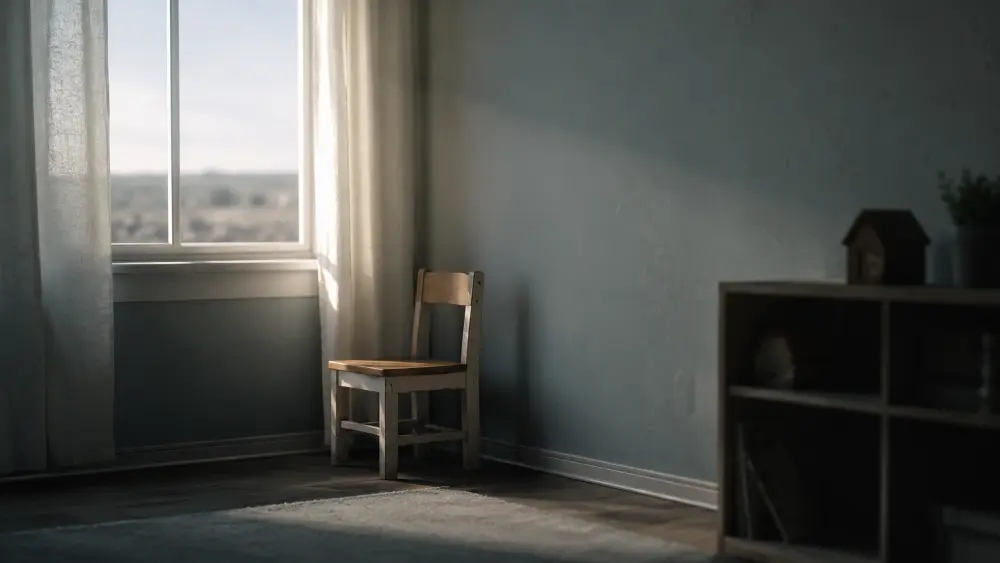
Growing up in survival mode changes the way a child understands safety, love, punishment, and belonging. When love feels conditional and fear becomes familiar, childhood stops feeling like a place to grow and starts becoming something to endure.
This is where that shift began for me.
When the World Turned Cold
I was around eight years old when everything changed.
Up until then, my childhood had been chaotic and unstable, but there were still moments of light—friendships, curiosity, small freedoms. When I went to live with my dad and stepmother, that light dimmed quickly. And then it went out altogether.
This wasn't just a new house.
It was a new reality.
Learning Where I Stood
In that home, love was measured, conditional, and uneven.
Some people were chosen. Some people were tolerated. And some people were simply... endured.
I learned early which one I was.
Food became scarce in ways that had nothing to do with availability. Praise existed, but it was never meant for me. Affection was something I watched being given to someone else.
I wasn't loud. I wasn't defiant. I wasn't cruel.
I was invisible.
And invisibility, I learned, was safer than being noticed.
Punishment Without Explanation
I learned what fear felt like in my body during those years.
Not fear of consequences—but fear without clarity.
Locked away. Isolated. Left alone with confusion and shame I didn't yet have words for.
There was no lesson being taught.
Only power being exercised.
And when punishment isn't about correction, a child learns something else entirely: that pain can arrive without warning and without reason.
That lesson stays with you.
Hunger as a Teacher
Hunger was not just physical.
It was emotional.
It taught me to ration—not just food, but need. To quiet my wants. To expect less. To survive on scraps and convince myself it was enough.
Even now, decades later, I still feel uncomfortable asking for help. Still struggle to believe I deserve abundance. Still feel the instinct to save, to hoard, to prepare for loss.
That instinct didn't stay confined to childhood. It followed me into the way I understand love, responsibility, and whether care had to be earned. I explore that more in How to Stop Believing Love Has to Be Earned.
Hunger doesn't leave when the fridge is full.
It stays in the nervous system.
Becoming Self-Made Too Early
No one guided my education. No one celebrated my achievements. No one asked how I was doing.
So I became my own teacher. My own coach. My own support system.
I learned discipline because chaos demanded it. I learned focus because distraction wasn't safe. I learned endurance because quitting was never an option.
That independence looks like strength to the outside world.
But it came at a cost.
Children shouldn't have to raise themselves.
Why I Still React the Way I Do
People sometimes see the man I am now and don't understand the moments where I falter.
The sudden emotional reactions. The sensitivity to injustice. The intensity in my love. The deep need for fairness and safety.
Those reactions were forged here.
When you grow up in a place where love is conditional and punishment is unpredictable, your nervous system never fully relaxes. You learn to stay alert. To read moods. To brace for impact.
Even today, when someone reminds me of those years—when I feel dismissed, ignored, or treated as less than—my body reacts before my mind can explain why.
That isn't weakness.
It's memory.
What These Years Took—and What They Gave
These years took things from me I'll never get back:
- a sense of safety
- carefree childhood innocence
- trust in authority
- the belief that adults always protect children
But they also gave me something I now recognize as purpose:
- empathy for the overlooked
- patience with wounded people
- fierce protection for my children
- intolerance for cruelty
- a heart that refuses to become what hurt it
I learned exactly what not to pass on.
The Beginning of the Man I Would Become
I didn't know it then, but these were the years that would shape every chapter that followed.
They shaped how I love. How I father. How I lead. How I forgive. How I endure.
They taught me survival—but they did not steal my humanity.
And that may be the greatest victory of my beginnings.
"I will not forget you. See, I have engraved you on the palms of my hands."
What This Chapter Taught Me
Survival can look like strength from the outside, but still leave wounds underneath.
Children should not have to earn safety, ration their needs, or become their own support system too early.
And yet, even the years that taught me fear did not get to decide the whole man I would become.
Continue the Story
These chapters continue the journey from childhood survival into love, faith, and fatherhood.
- How Discipline Became My Survival — The next step in how discipline became a refuge when safety was missing.
- How Childhood Shapes the Way You Understand Love — How childhood survival shaped the way I understood love, family, and legacy.
- How to Break Generational Patterns as a Father — How fatherhood became the place where I began choosing a different path.
Move Through This Book