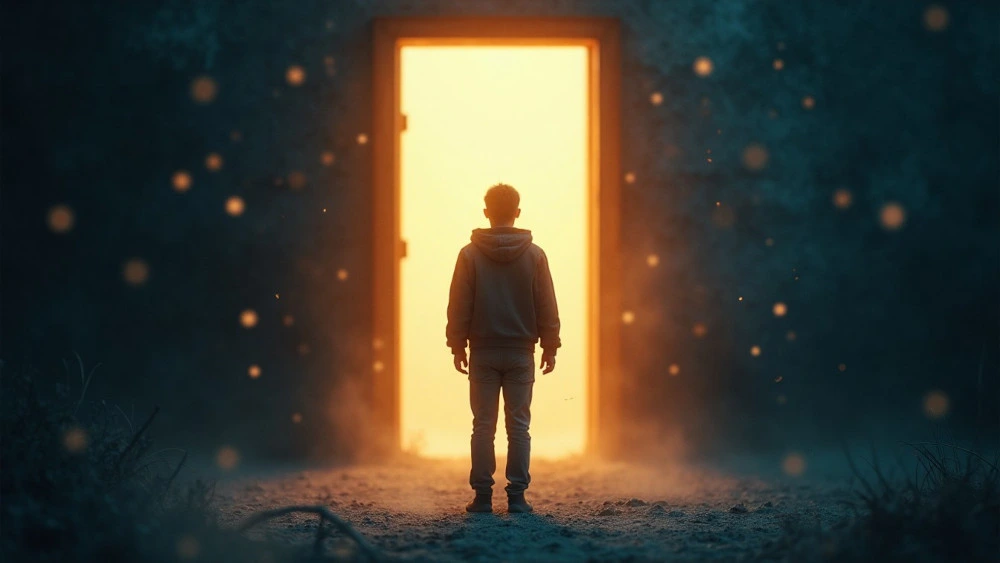
When closeness has been followed by pain, distance can start to feel safer than love. This chapter is about how early abandonment and inconsistent connection taught me to protect myself by staying guarded—even when part of me still wanted to be known.
When Distance Felt Safer Than Love
For a long time, I believed something about myself that didn't make sense on the surface:
I wasn't afraid of being abandoned.
I was afraid of getting close.
Closeness felt dangerous.
Abandonment felt familiar.
Why Distance Felt Safer
Distance didn't surprise me.
It didn't betray me.
It didn't change suddenly.
Abandonment hurt—but it hurt in ways I already knew how to survive.
Closeness was different.
Closeness required trust.
Closeness required hope.
Closeness asked me to believe that this time might be different.
That fear connects closely to How Conditional Love Shapes Your Sense of Worth, where love became something I understood from the outside before I knew how to safely receive it.
And hope, for someone with my beginnings, carried risk.
The Pattern I Learned Early
The closer I got to someone, the more it seemed to cost me later.
Connection didn't feel like security.
It felt like exposure.
I learned—slowly, quietly—that intimacy came with an expiration date. That the depth of love often determined the depth of heartbreak that followed.
So my nervous system did the math:
Less closeness now equals less pain later.
That reaction was not only emotional; it was physical too, something I explore more in Why My Body Reacted Before I Understood the Danger.
Abandonment as a Known Quantity
Abandonment didn't feel good.
But it felt predictable.
I knew what it looked like to be left.
I knew how to function in the aftermath.
I knew how to survive without expectation.
Closeness, on the other hand, required me to dismantle defenses that had kept me alive.
That felt far more dangerous.
How This Shaped My Relationships
This belief followed me forward.
I loved deeply—but carefully.
I gave—but with restraint.
I stayed—but kept an exit.
That guarded way of loving later affected how I understood connection, intensity, and emotional safety in Mistaking Intensity for Love.
I learned how to be present without being fully vulnerable. How to connect while still holding part of myself back.
Not because I didn't care—but because I cared too much to risk losing myself again.
Why Heartbreak Felt Inevitable
When closeness is associated with loss, heartbreak stops feeling accidental. It feels guaranteed.
So I braced for it.
Prepared for it.
Sometimes even expected it.
And in expecting it, I often experienced it more intensely—because I had already rehearsed the ending.
What I See Now
I see now that this belief wasn't pessimism.
It was protection.
A child who experiences inconsistent love learns that distance preserves control. That abandonment hurts less when it's already anticipated. That closeness creates a vulnerability the body doesn't trust.
I didn't choose this belief consciously.
It chose me—when closeness kept ending in pain.
What I'm Unlearning
I'm learning that closeness doesn't always end in loss.
That not every connection is a countdown.
That love doesn't always require bracing for impact.
I'm learning—slowly—that safety doesn't have to come from distance.
And I'm learning to forgive the part of me that once believed abandonment was safer.
Because that belief wasn't born from fear alone.
It was born from experience.
"Though my father and mother forsake me, the Lord will receive me"
What This Chapter Taught Me
- Sometimes distance feels safer because closeness once came with loss.
- Abandonment can feel familiar even when it still hurts.
- Guardedness is not always coldness; sometimes it is protection learned too early.
- Healing means learning that closeness does not always have to end in pain.
- I can forgive the part of me that chose distance before it knew safety was possible.
Learning to Feel Safe With Closeness
- How Conditional Love Shapes Your Sense of Worth
How early love shaped the belief that closeness had to be earned or protected from. - Why My Body Reacted Before I Understood the Danger
How fear taught my body to protect me before my mind had words for it. - Mistaking Intensity for Love
How old survival patterns followed me into the way I understood connection and love.
Move Through This Book