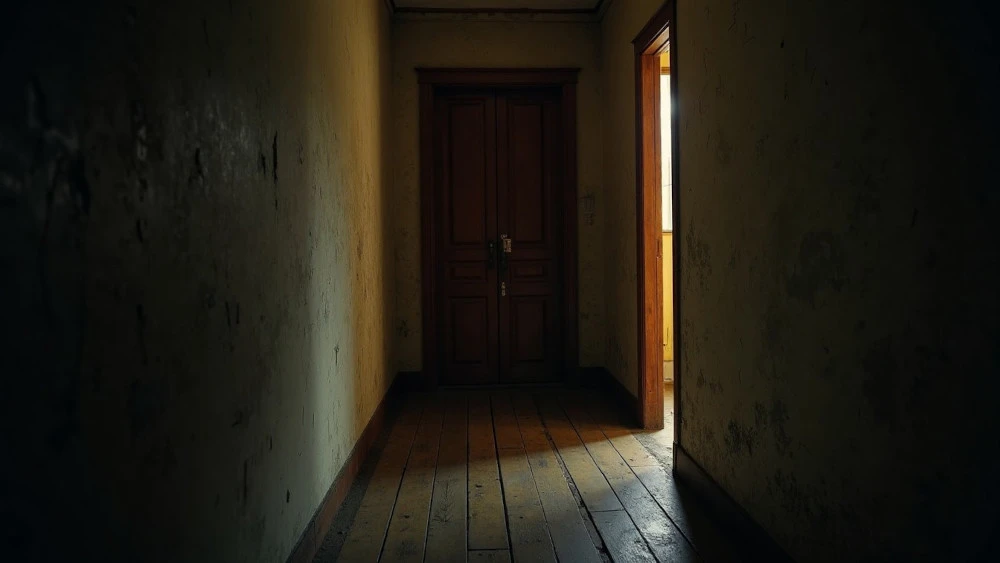
There are sounds that stay with you long after childhood ends.
For me, one of them is the sound of a door.
Not slamming.
Not shouting.
Just opening.
Because for years, that sound meant my father was home—and with it, the possibility that everything could change in an instant.
The Hours Before He Arrived
The worst part was never what happened afterward.
It was the waiting.
Waiting for headlights.
Waiting for footsteps.
Waiting for the mood of the house to shift.
My body would tighten long before my mind could explain why.
Heart racing.
Stomach knotted.
Breath shallow.
That early bracing is part of a pattern I explore more in Why My Body Reacted Before I Understood the Danger, where my body seemed to understand fear before my mind had language for it.
I learned to live in that suspended state—where time slowed and every sound felt amplified.
That kind of waiting doesn't teach patience.
It teaches fear.
A Good Father, Too Much Distance
This is where my story becomes complicated.
My dad was mostly a good and loving father.
He worked hard.
He provided.
He cared.
But he worked too much—and trusted too much.
He empowered my stepmother to decide what discipline looked like, and too often, those decisions were based solely on her version of events.
By the time he walked through the door, the verdict had already been delivered.
I didn't get to explain.
I didn't get to be seen.
Over time, not being seen taught me to make myself smaller, a pattern that shows up again in Why Being Seen Can Feel Unsafe After Childhood Trauma.
And discipline arrived without context—
without conversation—
without protection.
When Punishment Was Decided in Advance
There were many nights where my father's arrival meant corporal punishment—
spanking with a belt.
What stands out now isn't just the punishment itself.
It's the powerlessness.
The knowledge that no matter how the day actually went, the outcome was already decided. That my behavior would be interpreted through someone else's lens.
That sense of inevitability—
that nothing I did in the moment could change what was coming—
taught my nervous system a brutal lesson:
You can be good and still be punished.
The Days That Proved the Truth
Here's the part that still matters most to me.
On the rare days when my dad was home—
when he could see for himself—
none of that punishment happened.
Because he saw the truth.
He saw a mostly good kid.
A little hyperactive.
Curious.
Restless.
But not bad.
Those days proved something important:
The fear wasn't about who I was.
It was about who controlled the narrative.
Why Waiting Became the Trigger
I wasn't afraid of my father as a person.
I was afraid of anticipation.
Of not knowing what version of reality would be believed.
Of knowing I had no voice once the door opened.
Of living in the space between "maybe tonight is okay" and "maybe it isn't."
That kind of uncertainty trains a child to stay on edge—not because danger is constant, but because it's unpredictable.
And unpredictability is what the nervous system fears most.
How This Still Lives in My Body
Even now, waiting can make me uneasy.
Waiting for responses.
Waiting for reactions.
Waiting for judgment.
My body still remembers what it felt like to brace for impact before anything actually happened.
That isn't weakness.
That's conditioning.
This is one of the reasons childhood trauma can shape who you become long after the original moments have passed.
Holding Complexity Without Blame
I don't write this to villainize my father.
I don't write it to excuse my stepmother.
I write it to tell the truth about how fear works.
Fear doesn't require constant violence.
It only requires uncertainty and powerlessness.
And as a child, I lived in both.
What I Know Now
I know now that I wasn't a bad kid.
I know now that fear shaped my reactions more than disobedience ever did.
I know now that waiting itself can be traumatic.
Fear taught my body to prepare for what might go wrong, but How to Stay Open to the Future After Disappointment continues that journey by exploring how healing slowly teaches you not to close yourself off from what may still be good.
And I know this too:
A child shouldn't have to fear a door opening.
"My heart is in anguish within me; the terrors of death have fallen upon me. Fear and trembling come upon me."
What This Chapter Taught Me
- Fear does not always begin with the punishment itself; sometimes it begins with waiting.
- A child can learn to brace for danger before they understand why their body feels afraid.
- Uncertainty and powerlessness can shape a person long after the moment has passed.
- Healing begins when I stop calling those reactions weakness and start understanding where they came from.
Continue the Story
- Why My Body Reacted Before I Understood the Danger
How fear taught my body to respond before my mind had words. - When Closeness Felt Like the Greater Risk
How protection can turn into distance when being close once felt unsafe. - How Childhood Trauma Shapes Who You Become
How early fear can echo into identity, relationships, and healing.
Move Through This Book