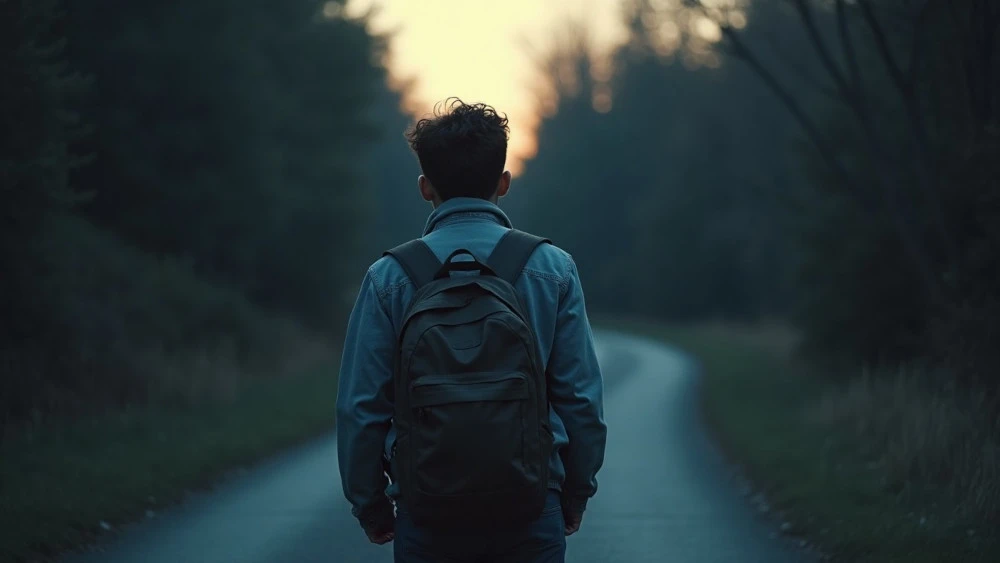
Childhood trauma can follow you into adulthood in ways you do not always recognize at first. It can shape how you react, how you love, how you protect yourself, and how hard it feels to trust safety even after life becomes more stable.
This is what those patterns looked like in my life.
When people talk about their beginnings, they sometimes speak as if the past is something you simply escape.
As if growing up, moving away, or starting over means the first pages stop affecting the rest of the story.
That was never true for me.
I did not walk away from my beginnings.
I carried them.
The Past Did Not Stay in the Past
Everything I survived followed me quietly into adulthood.
The hyper-awareness.
The need for control.
The discomfort with rest.
The instinct to stay ready.
The fear of depending too deeply on anyone.
Not because I wanted those things.
Because survival teaches lessons the nervous system memorizes.
I learned early how to endure.
Unlearning has taken much longer.
Those patterns did not start in adulthood. They were built in the years when survival became my default. I talk more about where that began in How Childhood Emotional Neglect Teaches You to Survive.
What Pain Gave Me Without Asking
I do not believe trauma is a gift.
I would never tell someone they are lucky for what they survived.
But I can be honest about this:
Pain shaped me in ways that still matter.
It gave me empathy without effort.
It gave me patience for broken people.
It gave me an instinct to protect.
It gave me an intolerance for cruelty.
It gave me the ability to sit with others in their darkness without flinching.
I know what it feels like to be unseen.
So I try to see people.
That does not make the pain good.
It means God can still grow something honest from ground that should have never been broken that way.
Why Kindness Was a Choice
Kindness did not come naturally from my environment.
It came from decision.
I chose not to become what hurt me.
I chose not to pass the damage forward.
I chose gentleness when hardness would have been easier.
That choice was not heroic.
It was survival in a different direction.
There were plenty of reasons I could have become cold. There were plenty of excuses I could have used to justify anger, distance, bitterness, or cruelty.
But I did not want my pain to become someone else’s wound.
So I kept choosing another way.
Not perfectly.
But intentionally.
Strength Was Never Just About Muscles
Strength, to me, has never meant dominance.
It has never been about proving I am untouchable or making sure no one can hurt me again.
Real strength became something quieter.
That quieter strength did not appear all at once. Some of it came from the discipline I built when survival was the only structure I had. I explore that more in How Discipline Became My Survival.
Staying human when life gives you reasons to harden.
Choosing restraint when rage feels easier.
Choosing compassion when bitterness feels justified.
Keeping your heart open when closing it would feel safer.
The strongest thing I ever did was refuse to let pain define my character.
That does not mean the pain disappeared.
It means it did not get the final word.
The Beginning of Faith, Not the End of Questions
Faith did not arrive in my life as certainty.
It arrived as hope.
Hope that suffering was not meaningless.
Hope that survival was not accidental.
Hope that the story was not over just because the first chapters were hard.
I did not yet understand how God fit into my story.
But somewhere deep inside, I believed I was still here for a reason.
I did not understand it then, but later I would begin looking back and seeing traces of God’s presence in places I once thought were only empty. That deeper reflection continues in How to Recognize God’s Hand in Your Life.
That belief would grow later.
Slowly.
Imperfectly.
Through questions I did not always know how to ask.
Faith did not erase what happened.
It gave me a way to believe that what happened was not all there was.
Why These Chapters Matter
I am writing these chapters not to reopen wounds for the sake of pain, but to tell the truth about where I came from.
Because healing does not happen by pretending.
Growth does not happen without honesty.
And the man I became makes no sense without the boy I was.
These were my beginnings.
Not gentle.
Not safe.
Not fair.
But they were not the end.
A Scripture I’m Carrying
Paul’s words in 2 Corinthians do not minimize suffering. They remind me that what is seen is not the whole story, and what was painful does not get to be the final measure of a life.
“For our light and momentary troubles are achieving for us an eternal glory that far outweighs them all.”
What This Chapter Taught Me
This chapter taught me that childhood trauma does not always disappear just because life moves forward.
- Sometimes it becomes instinct.
- Sometimes it becomes personality.
- Sometimes it becomes strength before you realize it is also a wound.
It taught me that healing is not only about remembering what happened. It is also about noticing what survival taught you to carry.
And it taught me that the first pages may explain me, but they do not have to finish me.
Continue the Story
These chapters continue the journey from what was carried forward into love, fatherhood, and faith:
- How Childhood Shapes the Way You Understand Love
How early survival shaped the way I understood connection and attachment. - How to Break Generational Patterns as a Father
Choosing not to pass forward the patterns I grew up with. - How to Recognize God’s Hand in Your Life
Recognizing how God was present even when I did not understand the story.
Move Through This Book