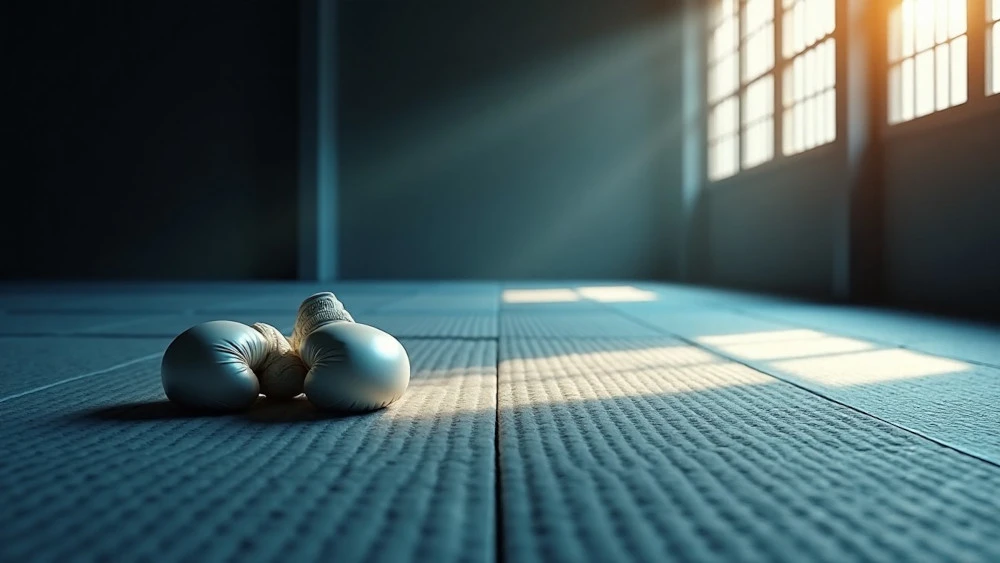
Trauma can change the way the body understands safety. When pain is predictable and love is not, the nervous system can begin to prefer what it can anticipate—even if it hurts. This can lead to patterns where chaos feels familiar and peace feels uncomfortable.
This is how that pattern formed in my life.
Why My Body Trusted the Mat
On the mat, pain had rules.
There were boundaries.
Referees.
Rounds.
Endings.
Pain wasn't personal.
It wasn't arbitrary.
It wasn't meant to humiliate or diminish me.
It was part of the process.
And when you grow up in an environment where emotional pain arrives without warning—where love is conditional and safety is fragile—your body learns to prefer what it can anticipate.
My nervous system didn't crave pain.
It craved predictability.
That pattern did not begin in adulthood. It was connected to the same survival instinct I wrote about in How Childhood Emotional Neglect Teaches You to Survive—the part of me that learned to trust what was familiar, even when familiar still hurt.
What That Says About Childhood
Children are not supposed to rank pain.
They're not supposed to decide which kind hurts less.
But I did.
Somewhere inside me, I learned that physical pain could be endured more easily than emotional harm. Bruises faded. Swelling went down. Broken bones healed.
But the pain of being unseen?
Unprotected?
Unwanted?
That pain lingered.
So my body made a choice before my mind ever could:
Choose the pain that makes sense.
Strength as a Refuge
Martial arts didn't just give me discipline.
It gave me refuge.
It gave me a place where:
- effort mattered
- rules applied equally
- respect could be earned
- pain had purpose
I wasn't confused there.
I wasn't guessing where I stood.
In a strange way, the mat became one of the first places I felt safe—
not because it was gentle, but because it was honest.
How This Followed Me Into Adulthood
Even now, I sometimes recognize this pattern in myself.
Why I tolerate discomfort longer than I should.
Why I downplay emotional pain.
Why I stay composed under pressure but struggle with vulnerability.
Why chaos feels familiar and calm feels suspicious.
My body learned early that pain was survivable.
What it didn't learn—until much later—was that safety doesn't have to hurt at all.
What I'm Still Unlearning
I'm learning that safety isn't supposed to come with bruises.
That peace doesn't need to be earned through endurance.
That love doesn't have to be proven by how much you can take.
I'm learning to let my guard down in places where there is no referee—
to trust softness, even when it feels unfamiliar.
And I'm learning to have compassion for the boy who chose pain because it was the only thing that made sense at the time.
He wasn't broken.
He was adapting.
What This Chapter Teaches Me Now
I don't judge that younger version of myself anymore.
He found safety where he could.
He chose survival over collapse.
He chose structure over chaos.
He chose pain that ended over pain that lingered.
That choice kept me alive.
Now, my work is different.
Now, I'm learning how to recognize safety when it doesn't hurt—
and to believe I'm allowed to stay there.
"You have kept count of my tossings; put my tears in your bottle." — Psalm 56:8
Continue the Story
These chapters continue the journey from survival, pain, and discipline into healing:
- How Childhood Emotional Neglect Teaches You to Survive
The earlier pattern of learning survival before safety. - How Discipline Became My Survival
How structure, martial arts, and self-control became a refuge when life felt unstable. - Why My Body Reacted Before I Understood the Danger
How the body can remember fear before the mind knows how to explain it.
Move Through This Book