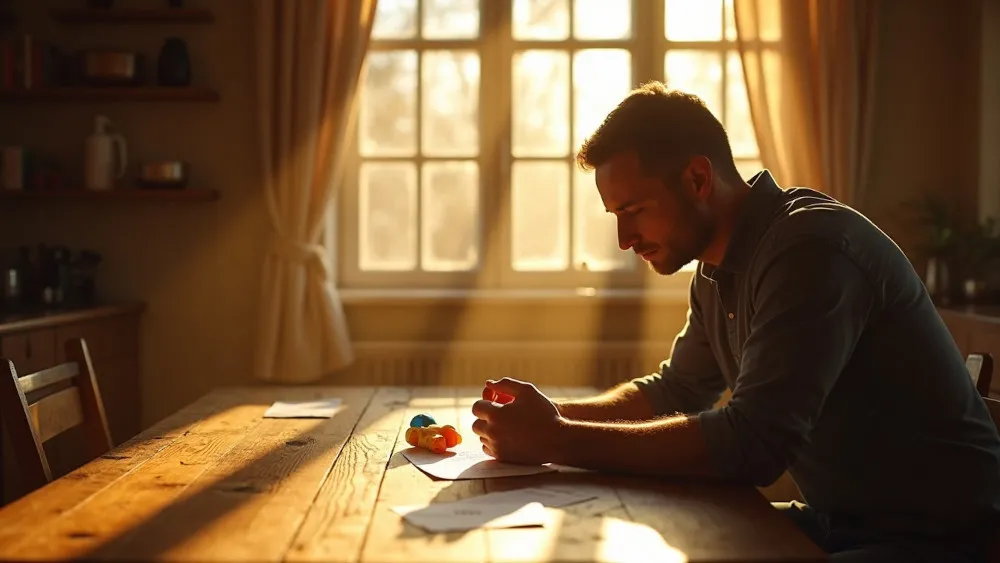
The Patience I’m Still Learning
Fatherhood teaches patience in the ordinary moments most people never see. It shows up when frustration rises, when correction feels urgent, when a child needs more calm than I feel like I have left, and when staying steady matters more than being right.
I didn’t realize how much of fatherhood would be internal.
I expected the work to be visible—teaching lessons, setting rules, guiding decisions, providing direction. What I wasn’t prepared for was how often the real work would happen inside me, in moments where restraint mattered more than response.
Patience, I’ve learned, isn’t passive.
It is active control.
It is choosing not to let frustration become the loudest voice in the room. It is slowing down enough to remember that my children are not only learning from my instructions.
They are learning from my reactions.
That lesson belongs after How Fatherhood Turns Responsibility Into Love, because patience is one of the ways responsibility becomes something my children can actually feel as safety.
When Reactions Come Easy
There are moments when reacting feels justified.
When correction feels urgent.
When frustration feels earned.
When the day already feels heavy and one more interruption feels bigger than it should.
Children have a way of testing limits—not always out of defiance, but through curiosity, emotion, immaturity, and growth happening in real time.
They are learning where the edges are.
The problem is that adults have edges too.
Fatherhood has shown me that my reactions teach just as much as my words do. Tone becomes memory. Volume becomes meaning. The way I respond in pressure-filled moments quietly shapes how they learn to handle their own emotions later.
That realization can be uncomfortable.
Because it means I am not only leading with my instructions. I am also leading with my tone, my timing, my patience, and my ability to stay grounded when things feel loud.
Choosing Calm Before Correction
Patience does not mean avoiding discipline.
It means delivering it without damage.
Sometimes leadership looks like pausing before speaking. Like letting a moment breathe instead of filling it with authority. Like choosing understanding over escalation. Like correcting without humiliating. Like staying firm without becoming harsh.
There are times I get this right.
There are times I do not.
But each time I slow down, each time I choose calm before correction, I am teaching something deeper than rules.
I am modeling how strength behaves when it does not need to prove itself.
A child may not remember every correction.
But they often remember whether correction felt safe or scary.
That matters.
What My Children Learn From My Reactions
Children do not hear instructions as clearly as they observe patterns.
They watch how conflict is handled.
They notice how stress is carried.
They absorb how mistakes are owned.
They learn what power looks like by watching how I use mine.
I have come to understand that patience is not just about making the moment easier.
It is about making the future safer.
Every measured response is a deposit into the emotional environment they are growing up in. Every time I pause instead of snap, explain instead of shame, repair instead of defend myself, I am shaping more than behavior.
I am shaping trust.
That is why this chapter connects naturally to What Children Learn From Their Father Without Being Taught, because children are often learning from the patterns we model long before they understand the lesson.
The Quiet Work of Restraint
Restraint sounds simple until life tests it.
It is easy to say I want to be patient when the house is calm, the day is light, and everyone is regulated. It is harder when there is noise, interruption, exhaustion, repeated questions, unfinished work, and a child needing attention at the exact moment I feel empty.
That is where patience becomes practice.
It asks me to slow down when I want to hurry.
To listen when I want to correct.
To explain when I want to snap.
To remember that small moments can feel large to a child.
Restraint does not mean I feel nothing.
It means I do not let every feeling lead.
It means I recognize the difference between a child needing guidance and my own frustration needing somewhere to go.
That is not always easy.
But it is necessary.
And sometimes that deeper work connects to How to Break Generational Patterns as a Father, because part of fatherhood is learning which reactions should not be passed forward just because they feel familiar.
Patience After I Fall Short
I wish patience always came before the mistake.
Sometimes it does not.
Sometimes I hear my tone after it leaves my mouth. Sometimes I realize too late that I corrected too quickly or reacted more sharply than the moment required.
Those moments matter.
But they are not the end of the story.
Repair matters too.
I am learning not to hide behind authority when I fall short. I am learning to come back, own what I need to own, and remind my children that love does not disappear because a hard moment happened.
That does not excuse impatience.
It gives me a way to grow from it.
Patience is not only what happens before I react. Sometimes it is what happens afterward, when humility asks me to repair instead of defend myself.
A Quiet Kind of Growth
“A hot-tempered person stirs up conflict, but the one who is patient calms a quarrel.”
That verse does not demand perfection.
It invites awareness.
It reminds me that patience has power. Calm has power. A measured response can settle what a harsh response would only inflame.
I am still learning.
Still adjusting.
Still catching myself mid-reaction more often than I used to.
Still realizing that progress in fatherhood often looks less like mastery and more like interruption.
Interrupting the old instinct.
The sharp reply.
The unnecessary escalation.
The need to be right more than I need to be steady.
That alone feels like progress.
Fatherhood is not refining my children as much as it is refining me.
Patience is one of the tools it keeps sharpening.
What This Chapter Taught Me
Patience in fatherhood is not weakness.
It is leadership with restraint.
Children learn from my reactions as much as they learn from my words. Staying calm does not mean avoiding discipline. It means delivering correction in a way that protects trust instead of damaging it.
The work of fatherhood is often internal before it becomes visible.
I am still learning that patience is not about being endlessly calm. It is about returning more quickly to steadiness, choosing repair when I fall short, and understanding that leadership at home often begins with the way I carry my own emotions.
That is the patience I am still learning.
Continue the Story
- How Fatherhood Turns Responsibility Into Love
How quiet commitments, steady choices, and everyday care shape trust and safety. - What Children Learn From Their Father Without Being Taught
A reflection on how children absorb habits, reactions, and character long before we realize they are watching. - How to Break Generational Patterns as a Father
How fatherhood invites me to interrupt the parts of my past that should not be passed forward.
Move Through This Book