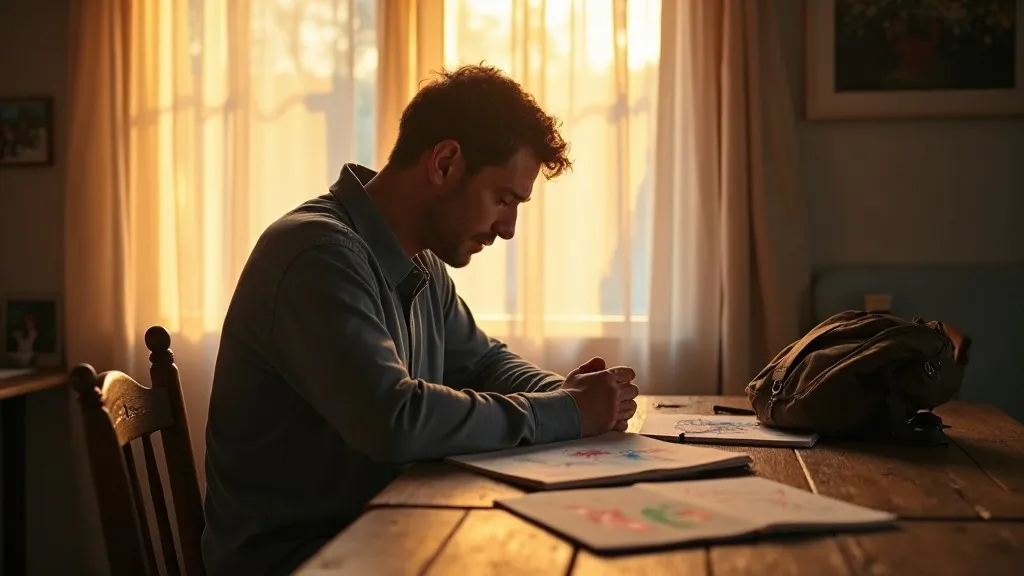
There is a fear I carry as a father that I do not like to look at directly.
Not because it is small.
Because once I admit it is there, I do not always know what to do with it.
I worry my children may not be ready for life.
Not in a shallow way. Not because I need them to become rich, impressive, or successful by the world’s standards. I worry in the survival sense. I worry about whether they will be able to stand in a world that can be hard, expensive, competitive, impatient, and unforgiving.
If you are a parent who quietly worries about your child’s future, their motivation, their discipline, or whether you are preparing them enough, this chapter is about that fear.
And about learning not to let fear become the only lens I use to see them.
When Experience Becomes a Warning
Part of what makes this fear so heavy is my own life.
I know I am intelligent.
I know I am capable.
I know I work hard.
And I still struggle.
That unsettles me more than I want to admit.
Because if intelligence, effort, and endurance were not enough to make life feel stable for me, what does that mean for my children?
Especially when they seem academically behind.
Or unmotivated.
Or uninterested.
Or unaware of how serious life can become.
I do not see in them the same urgency life forced into me early.
And that terrifies me.
That connects closely to How Discipline Became My Survival, because discipline became part of how I endured. But fatherhood keeps forcing me to ask whether the kind of urgency that helped me survive is the same thing my children actually need.
The Fear Beneath the Judgment
Sometimes I catch the thoughts before I soften them.
They are lazy.
They do not apply themselves.
They are behind.
They do not understand what is coming.
Those thoughts sound like judgment on the surface.
But underneath them is fear.
What if they are not equipped for the future?
What if I fail to prepare them?
What if I am too soft?
What if I am too late?
What if love is not enough to make up for what the world will demand?
Those fears do not come from disappointment.
They come from knowing how hard life can hit.
I know what it feels like to be unprepared for the weight of survival. I know what it feels like to carry responsibility before you feel ready. I know what it feels like when life does not wait for you to catch up.
So when I look at my children, I do not only see where they are.
Sometimes I see what I am afraid life might do to them.
Measuring Them Against My Own Survival
This is where I have to be careful.
I learned discipline through necessity.
I learned work ethic through pressure.
I learned focus through fear.
My children have not had to survive the way I did.
And part of me worries that comfort has robbed them of something essential.
But another part of me knows that belief may come from my trauma more than from truth.
Because I do not actually want my children to be forged by struggle.
I do not want fear to become their teacher.
I do not want hunger to become their motivator.
I do not want instability to become their discipline.
I want them to be shaped by guidance.
That is the tension I carry.
I want them prepared without being harmed.
Strong without being hardened.
Responsible without being afraid.
Motivated without believing love depends on performance.
That is also why How to Be a More Present Father matters in this journey. Presence gives me a chance to guide them while they are still becoming, instead of only reacting when fear tells me they are falling behind.
Responsibility Without Control
This may be one of the hardest parts of parenting:
You can love deeply and still not control the outcome.
I can teach values.
I can model effort.
I can create structure.
I can encourage learning.
I can correct patterns.
I can keep showing up.
But I cannot force ambition.
I cannot inject hunger.
I cannot manufacture maturity.
I cannot control every decision they will make.
I cannot guarantee who they become.
That helplessness sits heavy on me.
Because fatherhood makes you feel responsible for everything, even the things that were never fully yours to control.
I can guide.
But I cannot become their will for them.
I can prepare.
But I cannot live their future in advance.
That is why How Faith Redefines Responsibility as Stewardship, Not Control belongs in this path. I am still learning that fatherhood asks me to be faithful with what I have been given, not to confuse love with the ability to control every outcome.
When Fear Starts Sounding Like Pressure
One thing I am learning is that fear can disguise itself as good parenting.
Fear can sound like urgency.
Fear can sound like high standards.
Fear can sound like discipline.
Fear can sound like preparation.
And sometimes those things are needed.
Children do need structure. They need expectations. They need someone who cares enough to push them when they are drifting. They need parents who do not pretend everything will magically work out without effort.
But fear becomes dangerous when it stops seeing the child clearly.
If I am not careful, I can start parenting the future I am afraid of instead of the child in front of me.
I can turn concern into pressure.
I can turn guidance into anxiety.
I can make my children feel like they are already failing a life they have not even reached yet.
That is not the father I want to be.
I want to prepare them without making them feel doomed.
I want to challenge them without crushing them.
I want to help them grow without measuring them against the survival version of me.
That also connects to What Children Learn From Their Father Without Being Taught, because my children are not only learning from what I say about effort, discipline, and responsibility. They are also learning from how I carry fear, how I respond to uncertainty, and whether I treat their becoming with patience or panic.
A Faith That Interrupts Fear
“Therefore do not worry about tomorrow, for tomorrow will worry about itself. Each day has enough trouble of its own.”
— Matthew 6:34
That verse does not erase the fear.
It interrupts it.
It reminds me that my role is faithfulness, not foresight.
Presence, not prediction.
Stewardship, not authorship.
Guidance, not control.
My children’s lives are not equations I can solve through effort alone.
I can do my part today. I can teach what I know today. I can love them well today. I can correct what needs correction today. I can pray, guide, listen, and remain present today.
But tomorrow is not fully mine to carry.
That does not mean I stop caring.
It means I stop pretending fear gives me control.
What I Am Still Learning to Believe
I am learning that success is not always visible early.
Growth does not always look like discipline.
Maturity does not always arrive on my timeline.
Motivation does not always begin where fear says it should.
Struggle is not always proof that preparation failed.
I am also learning that my fear, while understandable, cannot become the lens through which I see my children.
They are not behind versions of me.
They are not failed projections of my effort.
They are not proof of whether I have succeeded or failed as a father.
They are still becoming.
And so am I.
What This Chapter Taught Me
The fear I carry about my children’s future comes from love.
But love still has to be careful with fear.
Fear can warn me.
It can wake me up.
It can remind me to guide, teach, and stay involved.
But fear cannot be allowed to rule the way I see them.
My children need preparation, but they also need patience. They need correction, but they also need belief. They need structure, but they also need room to become someone other than the survival-shaped version of me.
I cannot guarantee their future.
But I can be faithful with the part of their story I have been trusted to help shape.
That does not erase the fear.
But it keeps fear from becoming the father.
Continue the Story
- How Fatherhood Changes You
How becoming a father reshapes responsibility, fear, patience, identity, and the way love becomes something you carry. - How to Be a More Present Father
How presence helps children feel guided, known, and supported while they are still becoming. - How Faith Redefines Responsibility as Stewardship, Not Control
A faith-connected reflection on learning that responsibility does not mean controlling every outcome.
Move Through This Book